The Institute of Canine Biology
  • HOME
  • Blog
  • Breed Preservation
    • Breeding for the future >
      • BFF Breed Groups
    • Breed Status
    • The "Elevator Pitch"
    • What's in the Gene Pool?
    • What population genetics can tell us about a breed
    • What population genetics can tell you...Tollers & Heelers
    • How to use kinship data
    • Using EBVs to breed better dogs >
      • How population size affects inbreeding
      • EBV Examples
    • How to read a dendrogram
    • Global Pedigree Project >
      • The Database
    • Finding the genes without DNA
    • How to read a heat map
  • Courses
    • COI BootCamp (FREE!)
    • ICB Golden Retriever Breed Workshop
    • Minicourse: Preserve Genes To Preserve Breeds
    • Basic Population Genetics (FREE)
    • Genetic rescue: the genetics of cross breeding (NEW!)
    • The Biology of Dogs (Open Reg )
    • Managing Genetics For the Future >
      • Managing Genetics For the Future Open Reg (Open Reg) >
        • Syllabus - Managing Genetics for the Future
    • Genetics of Behavior & Performance (Open Reg)
    • Strategies for Preservation Breeding
    • DNA For Dog Breeders (May2025) >
      • DNA For Dog Breeders (Open Reg)
    • Understanding Hip & Elbow Dysplasia (Open Reg) >
      • MORE FREE COURSES >
        • Quickie Genetics (Free!)
        • Group Discounts
        • Useful Genetics (Free!)
        • Strategies for Preservation Breeding (Sept 2023) >
          • Heredity & Genetics (Free!)
        • Basic Genetics Videos
  • Health Data
    • Bloat (Purdue Study)
    • Body Condition Score >
      • % Dysplastic vs BCS
    • Breed Comparions
    • Cancer
    • Cardiac
    • Cataracts
    • Caesareans
    • Deafness
    • Degenerative Myelopathy
    • Elbow Dysplasia
    • Epilepsy
    • Genetic Diversity
    • Genetic Diversity (MyDogDNA)
    • Hip Dysplasia >
      • Hip Dysplasia (Hou et al 2013)
    • Metabolic
    • Inbreeding Effects
    • Inbreeding (Gubbels)
    • Inbreeding (Dreger)
    • Lifespan
    • Litter size
    • mtDNA
    • Orthopedic
    • Mode of Inheritance
    • Patella Luxation
    • Thyroid
    • Portosystemic shunt
    • Purebred vs Mixed (UC Davis)
    • Purebred vs Mixed Breed (Bonnett)
    • Spay & Neuter Effects
    • Calboli et al 2008
    • Hodgman (1963)
    • Scott & Fuller (1965)
    • Stockard: Purebred crosses
    • Summers (2011)
  • Resources
    • Stud Books >
      • American Kennel Club stud books
      • Field Dog stud books
      • The Kennel Club (UK)
    • Genetics Databases
    • Learn
    • Videos about dog genetics
    • The Amazing Things Dogs Do! (videos) >
      • Livestock Management
      • Livestock guarding
      • Transportation, exploration, racing
      • Conservation & wildlife management
      • Detection Dogs
      • Medicine & Research
      • Entertainment
      • AKC/CHF Podcasts
    • Read & Watch
    • Bookshelf
  • Projects
    • How To Interpret Breed Analyses
    • Ilska et al 2025 Figures >
      • # of dogs whole pedigree (Ilska)
      • Percent of Dogs Bred (LReg 2005-15)
      • % Males Bred
      • Imported Sires
      • Proportional Population Growth
    • Afghan Hound
    • More details about the Toller study
    • Belgian Tervuren >
      • Belgian Terv p2
      • Belgians- why population size matters
    • Bernese Mountain Dog
    • Boxer
    • Brussels Griffon
    • Bullmastiff
    • Canaan Dog >
      • Canaan analyses
    • Cesky Terrier >
      • Cesky genetic history
    • Chinook
    • Curly-coated Retriever
    • Doberman
    • Entelbucher Mountain Dog
    • Flatcoat Retriever
    • French Bulldog
    • German Shorthair
    • Golden Retriever >
      • Golden Retriever Pedigree Charts
    • Irish Water Spaniel >
      • IWS (6 Nov 17)
    • Labrador Retriever
    • Manchester Terrier
    • Mongolian Bankhar >
      • Research Updates
      • Bankhar 1
    • Norwegian Lundehund
    • Plummer Terrier
    • Otterhound
    • Portuguese Water Dog >
      • Portuguese Water Dog (pt 2)
    • Ridgeback
    • Schipperke
    • Standard Poodle >
      • The Problem With Poodles
      • 3poodle pedigree charts
      • 3Poodle Wycliff dogs
      • Poodle Genetics
    • Tibetan Spaniel
    • Tibetan Mastiff
    • West Highland White Terrier
    • Whippet
    • Wirehaired Pointing Griffons
    • UK KC Graphs >
      • UK KC Breed Status
      • UK Groups
      • KC Gundogs
      • KC Hounds
      • KC Terriers >
        • Terriers (select breeds)
      • KC Pastoral
      • KC Toys
      • KC Working
      • KC Utility
      • Australian KC
  • Genetics
    • Genetic Status of UK KC Breeds (2015)
    • Heterozygosity (DNA) >
      • Heterozygosity vs COI
      • Heterozygosity
      • High and Low Heterozygosity
      • Heterozygosity Countries
      • Heterozygosity by Breed
      • EU Breed Skull Restrictions
    • Mortality (Lewis et al 2018)

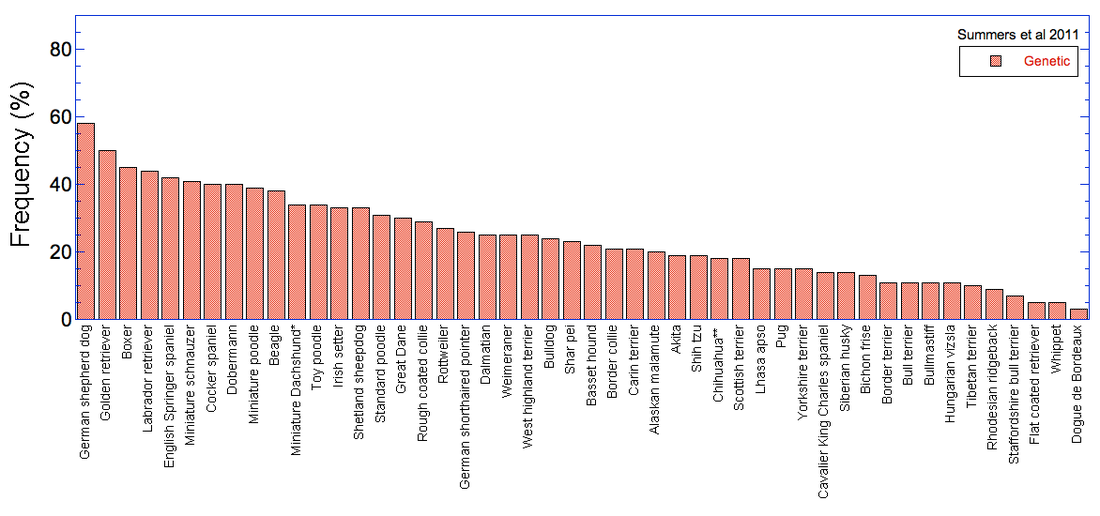
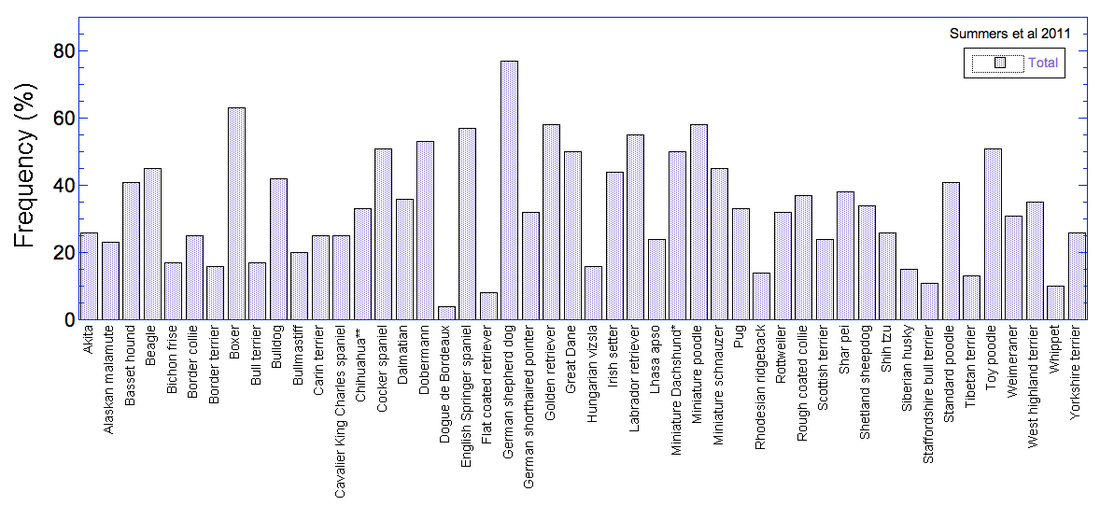
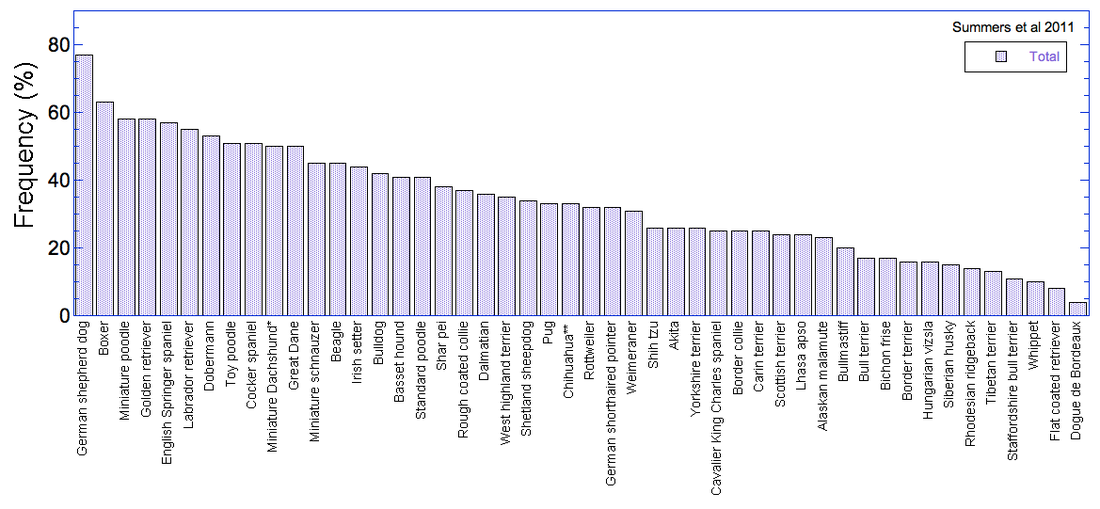
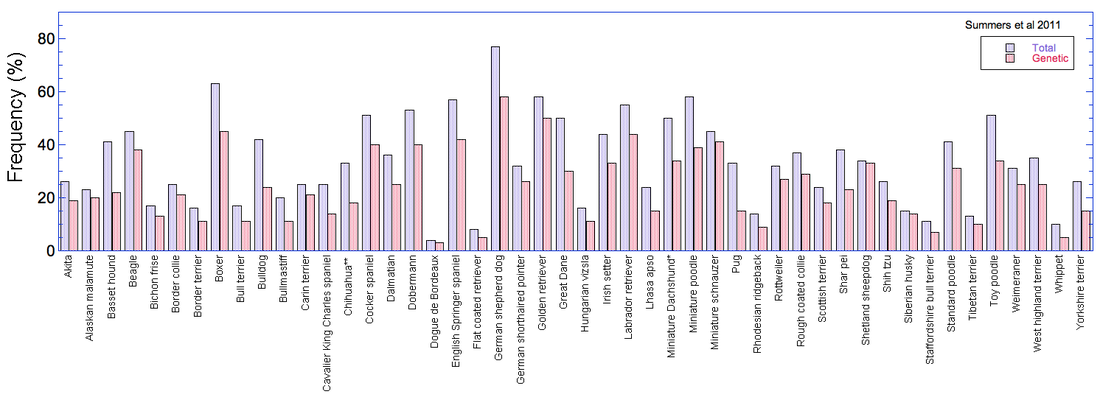
Frequency of Genetic Disorders:
Not related to breed standard
by Carol Beuchat PhD


Data from -
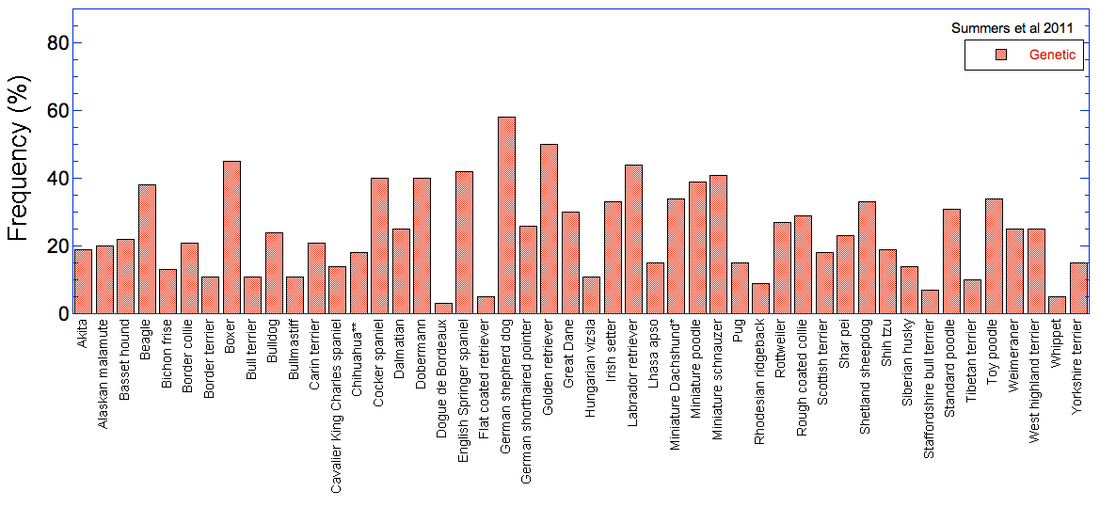
  • Summers JF, G Diesel, L Asher, PD McGreevy & LM Collins  2011 Inherited defects in pedigree dogs.  Part 2: Disorders that are not related to breed standards.  Vet J 183: 39-45.


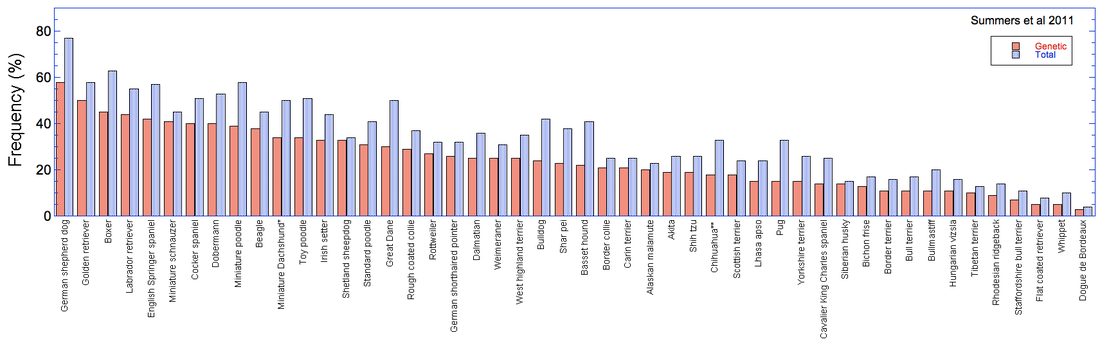
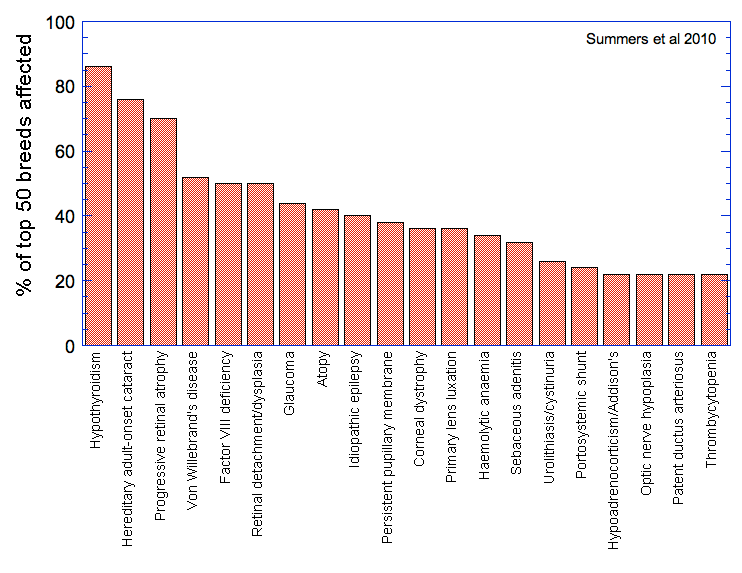
Frequency of disorders among the 50 most popular breeds in the UK in 2007
Picture


Classification of disorders:
  • "Genetic" - disorders that are inherited diseases with no link to conformation (= "D" in Summers et al)
  • "Total" - disorders resulting from selection for a conformation trait, or exacerbated by a conformation trait (= "C + CD" in Summers et al), plus "genetic" (i.e., C + CD + D).
Picture
Picture
Picture
Picture
Picture
Picture


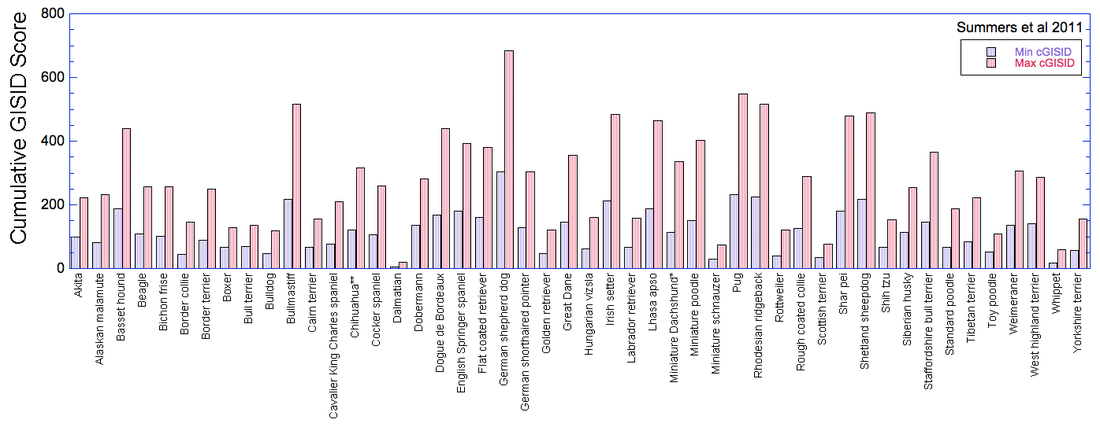
Genetic Illness Severity Index for Dogs:
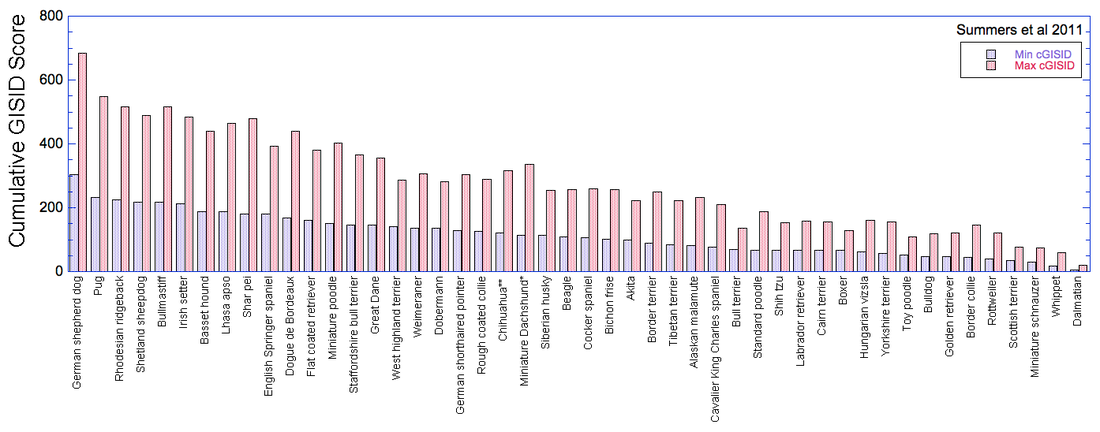
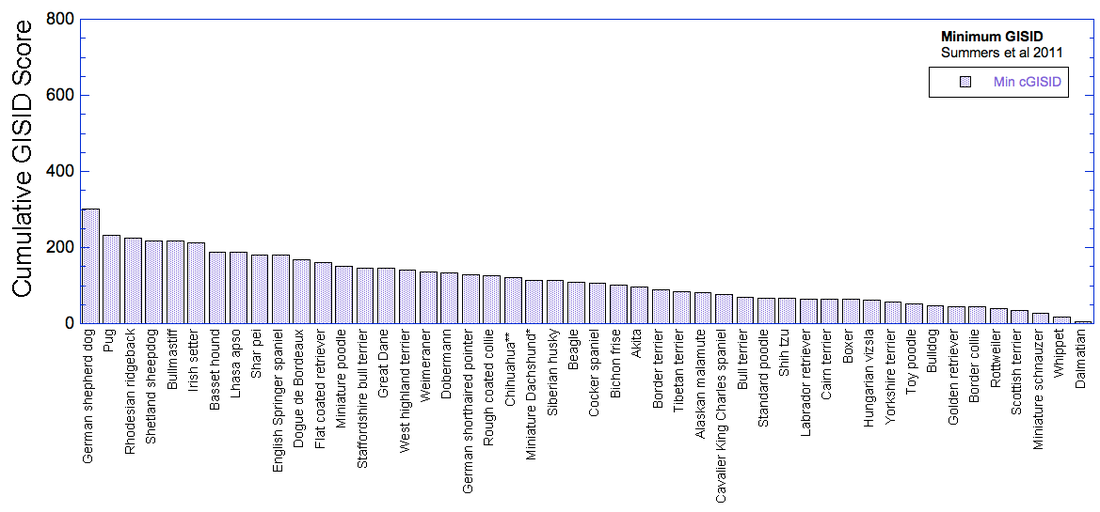
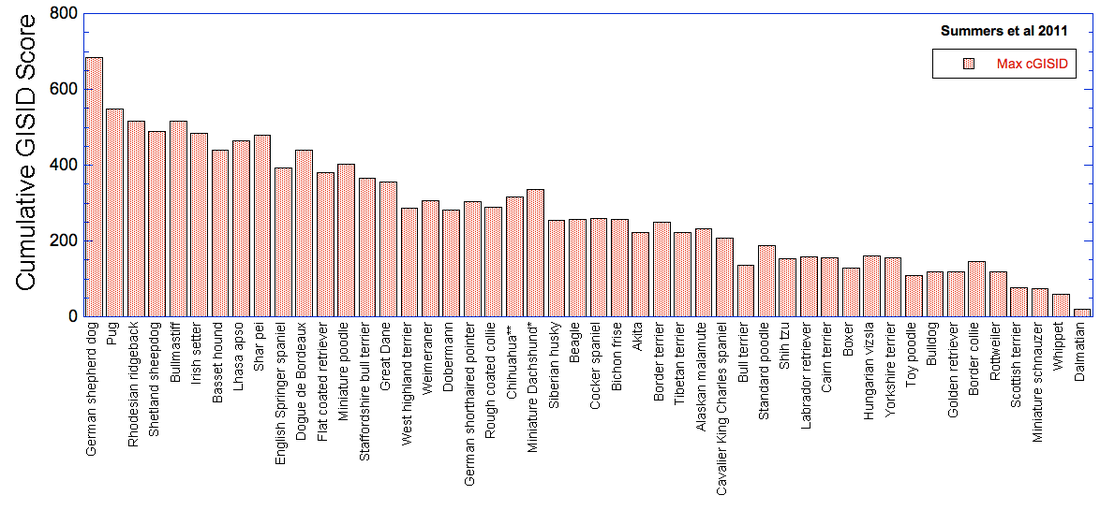
  • Based on evaluation of 4 aspects of each disorder (prognosis, treatment, complications, and behavior), with severity for each ranging from 0 to 4. Total score for a disorder can range from 0 (least severe) to 16 (most severe).  Cumulative GISID score is the sum of all of the total scores for each disorder.  (pdf)

Picture
Picture
Picture
Picture

Blog

News


About Us

Contact Us


Copyright © 2012-2017 Institute of Canine Biology
Picture
Picture